Divisions Preventing Pakistan’s Gen Z from Challenging Status Quo, Seminar Told
KARACHI: Speakers at a seminar have said Pakistan’s estimated 50 million Gen Z population has considerable potential to challenge the existing system and bring about change, but social divisions and other barriers are limiting its ability to play a decisive role.
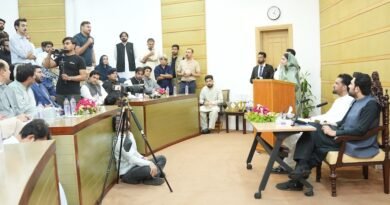
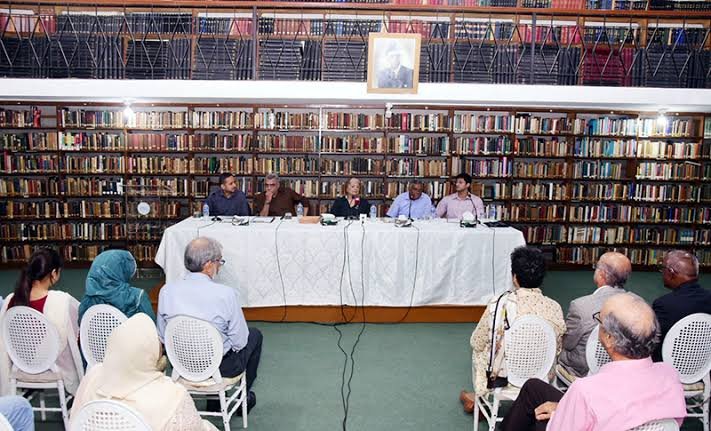
The views were expressed at a seminar titled “The Rise of Gen Z in South Asia”, organised by the Pakistan Institute of International Affairs (PIIA) in Karachi. Speakers discussed the political role of young people, protest movements, digital mobilisation and the potential of Gen Z to influence political and social change.
PIIA Chairperson Dr Masuma Hasan said Gen Z generally refers to people born between 1997 and 2012 and is the first generation to grow up with technologies such as the internet and smartphones.
She said India had the largest Gen Z population in South Asia, estimated at around 470 million, accounting for approximately 25% of the country’s workforce. She also referred to recent youth-led movements in South Asian countries as examples of the growing political influence of young people.
Former Dean of the Faculty of Social Sciences at the University of Karachi, Prof Dr Moonis Ahmar, said young people make up around 60% to 70% of Pakistan’s population but have remained relatively marginalised in terms of driving political change compared with youth movements in India, Sri Lanka and Bangladesh.
He said the potential for change in Pakistan remained significant, but the country’s Gen Z population was divided along class, sectarian and other social lines, limiting its ability to develop effective leadership and collectively challenge the status quo.
Dr Ahmar also pointed to restrictions on media freedom, saying the resulting political and social suffocation could create fertile ground for demands for change while making organised political action more difficult.
Columnist and research scholar Nadeem Farooq Paracha said Gen Z was currently under intense scrutiny and that society had already created a particular identity and narrative around the generation.
He said many youth uprisings had emerged unexpectedly and gone on to produce major political changes. However, he noted that several major political transitions in Pakistan’s history had resulted from military intervention or transfers of power rather than revolutions.
According to Paracha, recent movements have largely been horizontal rather than vertical, while major political transformation requires strong leadership and an organisational structure capable of challenging established power structures.
Dr Sajjad Ahmad of IBA Karachi spoke about Gen Z, protests, political change and the struggle for stability. He said Gen Z had contributed to positive change in some South Asian countries but had also participated in destructive forms of politics.
He said digitally networked political mobilisation represented a new form of political action, with Gen Z’s strength lying in its ability to rapidly transform localised grievances into mass movements.
PIIA researcher Syed Ehsan Ali Shah described Gen Z as the emerging architects of digital nationalism in South Asian politics.
He said technology was transforming political identities, the construction of national narratives and the organisation of protests, with digital platforms increasingly becoming central to political mobilisation.