National Dialogue Calls for Stronger Local Governance and Administrative Reforms for Karachi
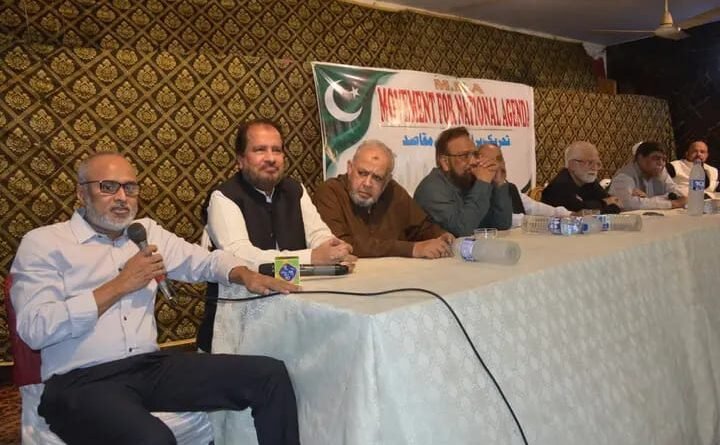
KARACHI: A national dialogue titled “Karachi: Facts and Solutions” brought together political leaders, economists, civil society representatives, business leaders, academics and journalists to discuss Karachi’s governance challenges and explore policy options for the city’s future.
The event was hosted at the invitation of senior politician and MIT Chairman Dr. Saleem Haider. Among the participants were National Dialogue Committee Chairman Mahmood Moulvi, former Finance Minister Miftah Ismail, CPLC founding president Nazim F. Haji, Sindh Assembly member Shaukat Rajput, former bureaucrat Muzaffar Alam Siddiqui, and several other prominent figures.
Participants highlighted Karachi’s central role in Pakistan’s economy, noting that the city contributes an estimated 60–70 percent of national revenues, over 80 percent of federal tax collections, and around 55 percent of the country’s exports, while serving as Pakistan’s principal financial and banking hub. Despite this economic significance, they said the city continues to face chronic shortages of water, deteriorating roads, inadequate sewerage, solid waste management issues, transport deficiencies, encroachments, unemployment and public safety challenges.
Speakers presented differing perspectives on possible solutions. Many argued that sustainable improvements require stronger and financially empowered local governments, equitable distribution of resources, greater administrative decentralization and more effective political representation for all urban communities.
Some participants also expressed the view that the urban population, particularly the Muhajir community, should receive a greater role in political decision-making and have a stronger voice in policies concerning land management, development planning and urban governance. These views were presented by some speakers during the discussion.
Key recommendations presented at the dialogue included conducting a new population census, establishing a financially autonomous local government system, expanding Karachi’s constitutional and administrative powers, ensuring a fair share in the NFC and PFC awards based on population and revenue generation, implementing emergency plans for water supply, transport, sewerage and solid waste management, merit-based recruitment in police and civic institutions, creating employment and investment packages for industry and youth, and improving transparency in land records and urban planning.
Participants concluded by expressing their commitment to continuing the dialogue process and developing practical policy recommendations for submission to the relevant authorities.