
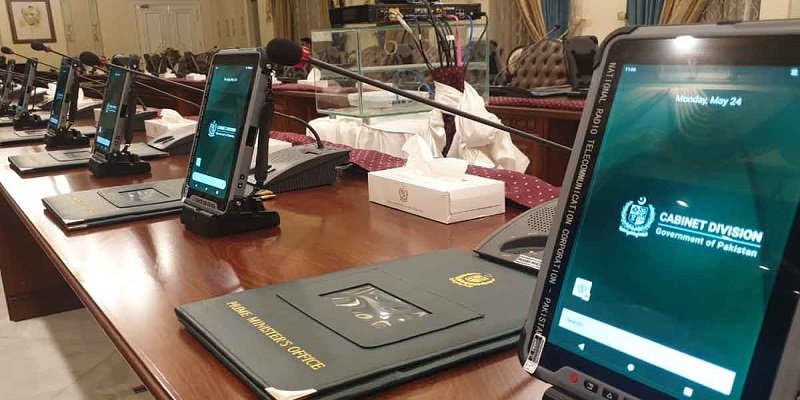
Punjab government orders all offices to go completely paperless, E-FAS system expanded to districts
LAHORE: The Punjab government has taken another major revolutionary step towards promoting e-governance and modernizing official business by issuing directives to make all government offices across the province completely paperless. Following the successful transition of central departments at the Punjab Civil Secretariat to the E-Filing and Office Automation System (E-FAS), all field offices in the districts are now being integrated into this digital system.
Under the new directives, all field offices will be bound to conduct official correspondence exclusively through E-FAS starting July 1. The elimination of the traditional file system and implementation of this modern IT system will result in substantial savings of billions of rupees annually for the Punjab government.
The instructions regarding the implementation of E-FAS in all government offices across the districts were issued by Chief Secretary Punjab Zahid Akhtar Zaman while chairing a secretaries conference held at the Punjab Civil Secretariat. The high-level meeting was attended by Additional Chief Secretaries, Senior Member Board of Revenue, and secretaries of all provincial departments. All divisional commissioners and deputy commissioners of the province participated in the meeting via video link.
Addressing the conference, Chief Secretary Punjab Zahid Akhtar Zaman stated that Punjab government’s IT initiatives are a shining example of success for ensuring transparency, efficiency, and prompt resolution of public issues in official business. He also praised the outstanding performance of the Punjab Information Technology Board (PITB) for departmental digitalization and IT reforms.
The E-Filing and Office Automation System (E-FAS) is a flagship digital initiative of the Punjab government designed to transform traditional paper-based workflows into fully digital processes. The system enables government departments to create, process, approve, and store official files electronically, eliminating the need for physical paper movement. This not only speeds up decision-making but also significantly reduces the cost of printing, stationery, file storage, and courier services.
Under the expanded system, all district-level offices including deputy commissioner offices, divisional headquarters, and field offices of various provincial departments will be connected to a centralized digital platform. Government officials will be able to access files, send notes, and approve summaries from any location using secure login credentials. The system also maintains a complete digital record of all decisions, ensuring accountability and transparency in government operations.
The transition to a fully paperless environment has multiple benefits beyond cost savings. It reduces the government’s environmental footprint by saving thousands of trees annually that would otherwise be used for paper production. The digital system also protects official records from physical damage, loss, or tampering, as all files are securely stored on cloud servers with encrypted access controls.
Furthermore, the E-FAS system significantly reduces the time required for file movement between departments. What previously took days or even weeks to move a physical file from one office to another can now be accomplished in minutes through digital transfer. This improved efficiency directly benefits citizens who seek government services and approvals.
Chief Secretary Zahid Akhtar Zaman directed all divisional commissioners and deputy commissioners to ensure complete implementation of the paperless system in their respective districts by the July 1 deadline. He warned that any delay or non-compliance would be viewed seriously. The provincial government has also arranged comprehensive training sessions for government employees to ensure a smooth transition to the digital system.
The Punjab government’s move towards a fully paperless administration aligns with the broader vision of Chief Minister Maryam Nawaz Sharif to introduce modern governance practices across the province. The initiative is expected to serve as a model for other provinces to follow in their quest for digital transformation.