Sindh Cabinet Approves Major Decisions on Wheat Security, Employee Relief, AI Task Forces and Reforms
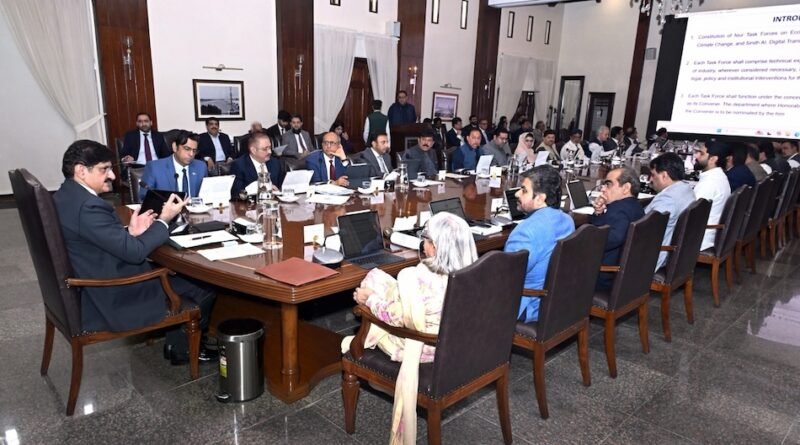
Karachi: The Sindh Cabinet, chaired by Chief Minister Syed Murad Ali Shah, approved a wide-ranging package of policy, governance and development measures, including wheat procurement plans, relief measures for government employees, strategic task forces on artificial intelligence and climate change, education reforms and infrastructure initiatives.
The cabinet reviewed the province’s wheat supply situation and considered a proposal to purchase 220,665 metric tonnes of wheat from PASSCO to maintain strategic reserves and stabilise market prices.
Senior Minister for Information and Transport Sharjeel Inam Memon said that if the federal government imports wheat, Sindh will purchase 500,000 tonnes to strengthen food security.
The cabinet was informed that Sindh produced 4.7 million metric tonnes of wheat during 2025-26, with total availability reaching 4.84 million metric tonnes. However, due to rising consumption, the province may face a shortage of around 2.11 million metric tonnes by March 2027.
Chief Minister Murad Ali Shah directed the Food Department to intensify action against hoarders, recover concealed wheat stocks and ensure stable flour prices across the province.
The cabinet approved a relief package for provincial employees, including a 2 percent differential allowance for employees from BPS-01 to BPS-16 and a 50 percent increase in travelling allowance for all government employees. The special travelling allowance for employees with disabilities was also increased from Rs6,000 to Rs10,000 per month.
The meeting approved the establishment of four strategic task forces focusing on economy and industry, water resources, climate change, and artificial intelligence and digital transformation. These task forces will include experts, academics and industry representatives to provide policy recommendations to the provincial government.
The cabinet also approved the Sindh Boards of Intermediate and Secondary Education Reform Package 2026, aimed at modernising examination systems through digital solutions, online verification services, QR-coded certificates and improved transparency. The reforms will be implemented over a period of 24 months.
Legal amendments were approved to strengthen action against harmful substances including gutka, mawa and mainpuri by bringing them under a stronger regulatory framework.
The cabinet further approved several major projects, including the establishment of Mirpurkhas Water and Sewerage Corporation, declaration of RBUT Hospital Shikarpur as a teaching hospital, development of a modern logistics park at Northern Bypass Karachi, and revised costs for the Dumlottee-DHA water pipeline project.
The Sindh Cabinet also approved participation in the Hunan International Sister Cities Economic and Trade Forum in China and authorised steps to establish sister province relations between Sindh and China’s Hunan province to enhance trade, investment, technology transfer and economic cooperation.